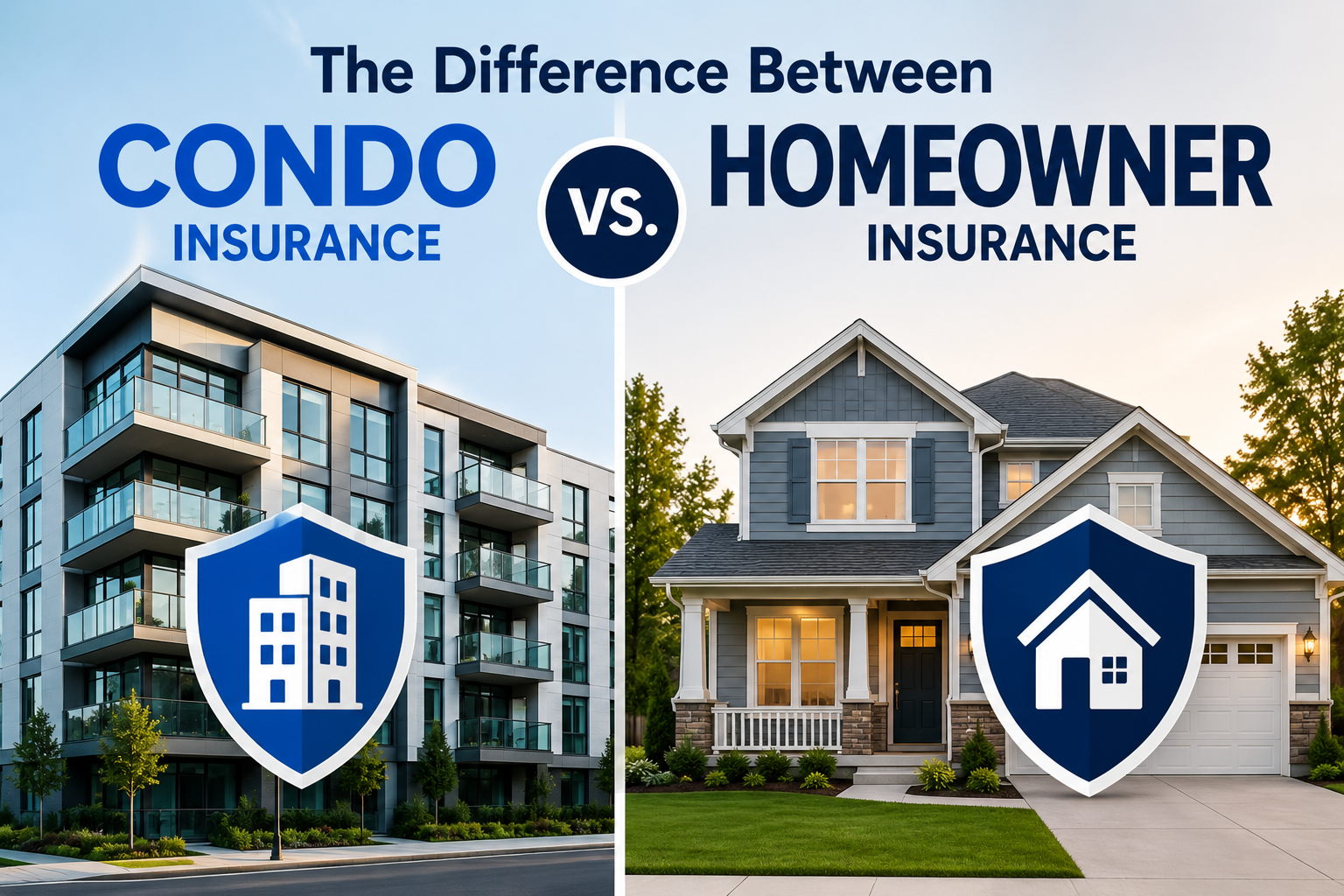
If you’re in the market for condo insurance, your personal research or agent may have referred to it as HO-6 insurance. Condo insurance, or also known as HO-6 insurance, protects the unit’s interiors, personal belongings, and liability, covering what the Homeowner’s Association policy doesn’t cover. The difference between condominium insurance and standard homeowner insurance is the difference in homeowner association coverage.
If you live in a single-family home that participates in a HOA, the HOA most likely doesn’t cover any repairs or damage; instead, HOA representatives oversee HOA rules and regulations. In a HOA neighborhood, homeowners might be ticketed for painting their door a non-approved color or receive a citation for not retrieving their trashcan from the curb within a specific amount of time. Neighborhood HOAs may also provide pool maintenance for community pools or clean up for a neighborhood park. HOAs in a single-family home neighborhood oversee the standards for which the homeowners must abide by.
Most condominium insurance policies include cover for losses arising from fire or lightning, windstorms, smoke, vandalism, theft, or accidental water damage. Some condo policies may also cover outside areas and belongings—depending on access to a personal deck or storage area.
Typically, condominium insurance doesn’t cover the building’s structure so it isn’t surprising that earthquakes and floods are also not covered. The cost of condo insurance depends on the location, age of the building, and the amount of coverage that’s needed; however, it’s important to thoroughly review your HOA policy so you can seek out other coverage options that are available. Many condo owners mistakenly believe the HOA policy covers upgrades, renovations, and fixtures within their walls; however, these instances are the owner’s responsibility. The confusion is often in the owner’s misunderstanding of the “walls-in” coverage.
Standard condominium policies often exclude coverage for sewage backups and/or overland water damage—these instances often require separate coverage.
Depending on the area you live in, securing condominium insurance may be challenging due to the increasing risks of wildfires, earthquakes, and other natural disasters. Not only do insurers often limit policies in certain regions, but they’re also known to increase premiums in these high-risk locations.
Nonetheless, it’s important for condominium owners to familiarize themselves with their HOA policy so they know what type of insurance coverage is needed to adequately secure their home and belongings.