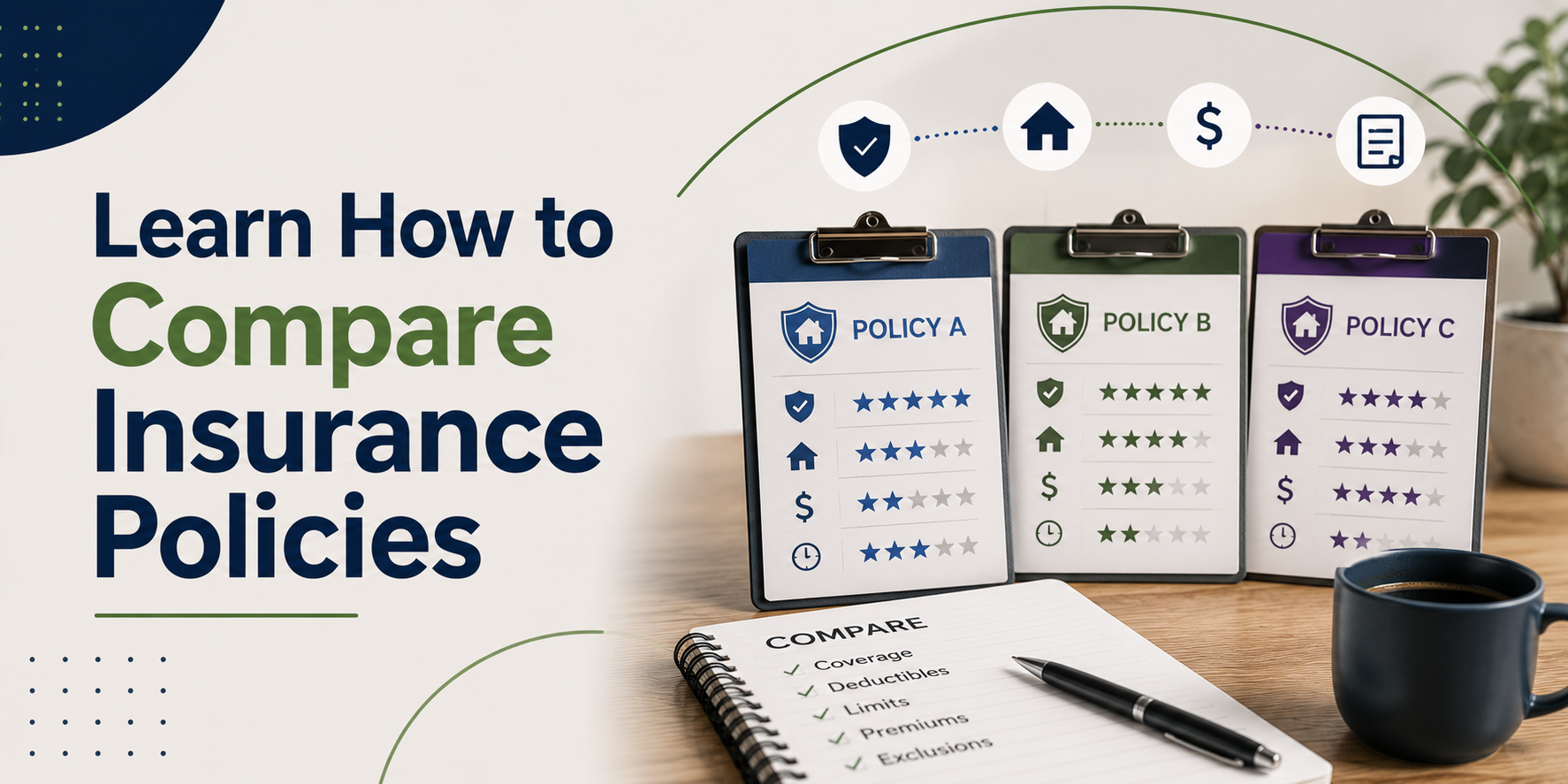
Learning how to compare homeowner insurance policies is a crucial part of being a homeowner. While you want to always maintain solid protection, you also need the pricing to be fair. At first glance, policies may seem similar in price; however, the details can vary significantly, and those differences can have a major impact when a claim is filed. By understanding what to look for and how to evaluate coverage, you can make more confident and informed decisions. Here are six steps to teach you how to compare insurance policies.
Step #1
Get multiple quotes so you can compare insurance policy benefits. Ask insurers to explain details in plain language that will prevent misunderstandings later.
Step #2
When comparing homeowner insurance policies, understand the types and amounts of coverage offered. You should review the dwelling limits to ensure the policy will fully cover the cost to rebuild the home, not just the home’s market value. Construction costs, local labor rates, and materials are all factors when calculating rebuilding expenses—and those costs change depending on the economy and availability.
Personal property coverage is also important. Homeowners should check whether coverage is based on actual cash value or replacement cost—as replacement cost generally provides better for belongings.
Step #3
Compare covered perils and exclusions. While most standard policies cover common risks such as fire, wind, and theft, not all policies cover the same events. For example, flood and earthquake damage are usually excluded and require separate policies. Reviewing exclusions will help you understand what is not protected and whether additional coverage is needed based on your home’s location and the risk factors.
Step #4
Compare liability coverage. This coverage protects homeowners if someone is injured at your property. You should evaluate whether the liability limits are high enough to protect your assets, especially if you have frequent guests, pets, or expensive items at the house. In some cases, adding an umbrella policy might be something to consider.
Step #5
Assess the deductibles and compare policies. A deductible is the amount you’ll pay out of pocket before insurance coverage begins. Policies with lower deductibles usually have higher premiums, while higher deductibles can lower monthly or annual costs. You should choose a deductible that you can realistically afford in an emergency, rather than focusing on the cheapest premium.
Step #6
Research the insurance company itself and not just the policy. Compare customer reviews, financial strength ratings, and claims satisfaction scores so you’ll have insight into how reliable an insurer is and how smoothly claims are handled. A slightly higher premium may be worthwhile if the company has a solid reputation for customer service and timely payouts.
Taking the time to compare coverage limits, exclusions, deductibles, and insurer reliability will give you the ability to choose an insurance policy that truly meets your needs. A thoughtful comparison not only helps you save money but it ensures peace of mind when unexpected events occur.